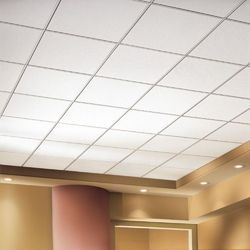
 Suspended ceiling is a decoration application with or without LED light, depending on the preference made with the help of drywall on the ceilings. While suspended ceilings are generally preferred for the halls of the houses, it is the type of ceiling covering used in offices.
Suspended ceilings, which are among the strong structures in terms of decoration, should be used for large houses or large halls. Suspended ceiling, which is mostly preferred with LED lights or spotlights today, creates a perfect atmosphere when used with a stretch ceiling.
Of course, before choosing a suspended ceiling, it is necessary to know its features in order to use it correctly and to be suitable for the decoration of the house.
Suspended Ceiling Construction
Although the suspended ceiling is very stylish in appearance, it is not among the works that can be done by every master. Because the practicality of the master who will apply for the construction of the suspended ceiling should also be a decoration mind. For this reason, suspended ceilings should be made by professional people as a team.
While drywall is preferred in the construction of suspended ceilings in our country, the prices of suspended ceilings, which require both skill and a long process, vary according to the model and working time. Suspended ceiling models can also be made in a wide variety according to the size and shape of the room to be made.
During the construction of the suspended ceiling, first of all, the suspended plain grid should be designed correctly. Of course, it is very important to take the correct dimensions of the room for the correct design of the grill. Thus, if the measurement is taken correctly, the grille will be easy to assemble. After the grid is mounted for the suspended ceiling, accessories such as led or spotlights that need to be hidden are placed. Finally, the prepared plasterboard sheet is placed on the mounted grille and closed. But it should not be forgotten that the construction of the suspended ceiling varies according to the characteristics of the suspended ceiling.
Situations where Suspended Ceilings are Preferred
For the construction of a suspended ceiling systems, first of all, the needs of the house or office where the application will be made must be determined. For example, a suspended ceiling can be preferred for covering visible installation or electrical pipes. Thanks to the plasterboard, the pipes are closed and the ceilings are provided with a beautiful appearance.
The duties of suspended ceilings are not limited to this, but they are preferred for thermal insulation and insulation. If your home has a heating problem, there may be heat loss from the ceilings and in this case, suspended ceilings made of plasterboard will help increase your home temperature.
In addition, if lighting is desired during decoration, led lights or spot lights can be used by choosing a suspended ceiling. In this way, the house will appear more spacious and wider as the items in the house are better lit. For this reason, suspended ceilings are preferred by interior architects.
Considerations When Making a Suspended Ceiling
If the suspended ceiling is made for lighting and if spot or LED light is to be used, electrical applications will be in question, so electrical and drywall works must be carried out in a coordinated manner. At the same time, if you have a thought of painting the whole house, since paint and whitewash will be required at the end of the process, coinciding with this process will allow you to reach the desired result more easily; It will help speed up the process.
During the construction of the suspended ceiling, the suspended ceiling should be at least 4-5 cm thick and at most 7-8 cm thick. In addition, an important point is the screwing process of the drywall sheet, so that there should be a maximum of 30 cm gaps between the screws during screwing.
 Flooring Systems